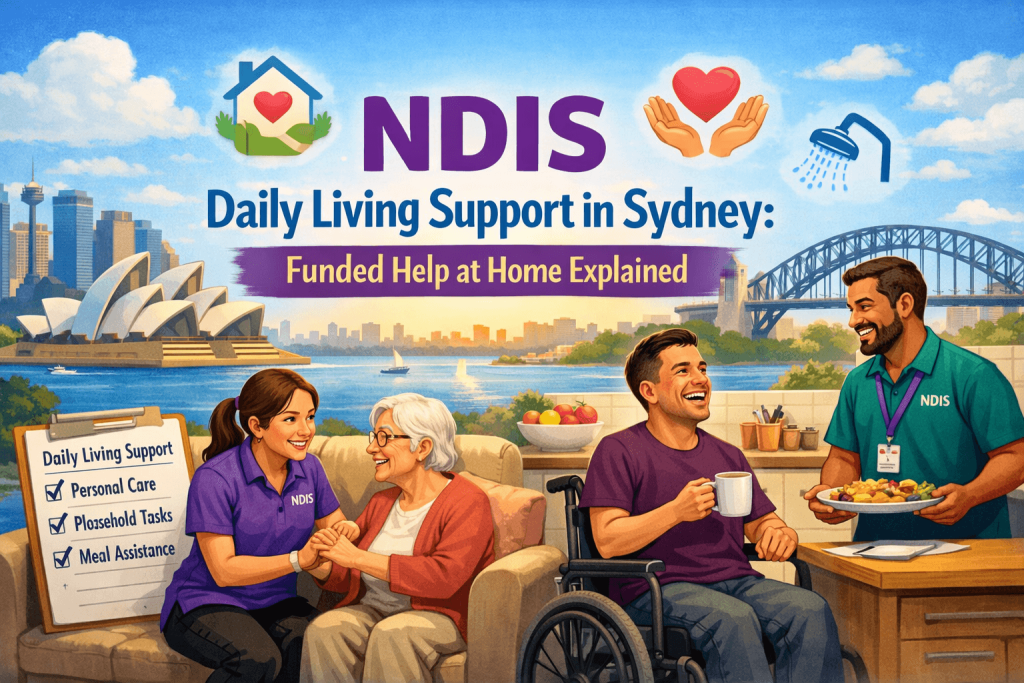


NDIS Care Explained: From Daily Living to Complex Supports
The National Disability Insurance Scheme (NDIS) provides Australians living with disability with funding for a wide range of supports. These supports are designed to help participants live independently, engage with their communities, and achieve personal goals.
Understanding the types of NDIS care available—from everyday assistance to complex, specialised support—is essential for participants, families, and carers. This guide explains NDIS care in detail, including who can access it and how it works.
What Is NDIS Care?
NDIS care refers to funded supports that are considered reasonable and necessary to help a participant live safely and achieve their goals. These supports are outlined in a participant’s NDIS plan and are tailored to their individual needs, aspirations, and life stage.
NDIS care can be delivered in various settings:
- At home, to support daily living and independence
- In the community, to encourage participation and social inclusion
- In supported accommodation, for participants requiring high-level or ongoing care
Funding is allocated according to the participant’s goals and functional needs.
Daily Living Supports
Helping Participants Manage Everyday Tasks
Daily living supports are the most common type of NDIS care. They assist participants with routine tasks that may be difficult due to disability.
Examples include:
- Personal hygiene and grooming
- Meal preparation and feeding
- Household tasks like cleaning and laundry
- Assistance with mobility and transfers
- Medication reminders
These supports ensure safety, dignity, and independence at home. They can be provided short-term, ongoing, or flexible, depending on the participant’s needs.
Personal Care Services
Maintaining Dignity and Independence
Personal care services focus on hands-on support for essential personal needs. These are delivered by trained support workers who respect the participant’s choices and routines.
Typical personal care supports include:
- Showering and toileting assistance
- Dressing and grooming
- Continence support
- Transfers and mobility assistance
NDIS personal care is designed to promote independence while ensuring safety and comfort.
Community Participation Supports
Staying Connected and Engaged
NDIS care is not limited to home-based support. Community participation services help participants access social, recreational, and educational activities, reducing isolation and promoting inclusion.
Community support may include:
- Attending clubs, events, or classes
- Volunteering or work-related activities
- Hobbies and recreational programs
- Assistance with transport to community venues
These supports help participants build confidence, social skills, and meaningful connections.
Allied Health and Therapy Services
Building Skills and Long-Term Capacity
Therapeutic supports funded by the NDIS aim to improve a participant’s functional capacity, independence, and wellbeing. Services are delivered by qualified allied health professionals.
Common therapy supports include:
- Occupational therapy
- Physiotherapy
- Speech pathology
- Psychology and counselling
- Behaviour support
These supports are often goal-focused and can be delivered at home, in schools, clinics, or community settings.
Supported Independent Living (SIL)
Ongoing Support in Daily Life
Supported Independent Living (SIL) provides 24/7 or scheduled support for participants living in shared or individual accommodation. SIL focuses on helping participants develop independent living skills while ensuring safety and supervision.
SIL supports may include:
- Assistance with daily routines
- Help with meals and household management
- Overnight supervision
- Skill-building for independence
SIL funding covers care, not rent or utilities, and is tailored to individual support needs.
Specialist Disability Accommodation (SDA)
Housing for High Support Needs
Specialist Disability Accommodation (SDA) provides purpose-built homes for participants with extreme functional impairment or very high support needs.
SDA is designed to:
- Improve accessibility and safety
- Enable the delivery of complex care
- Support independent living for participants with high needs
SDA funding is separate from SIL, focusing on housing and infrastructure, while care is covered under other supports.
Complex and High-Intensity Supports
Care for Participants with Advanced Needs
Some participants require specialised, high-intensity care due to multiple disabilities, medical conditions, or behavioural needs. The NDIS funds supports that address these complex requirements.
Complex supports may include:
- High-level personal care
- Behavioural support programs
- Specialist-trained support workers
- Coordination with health professionals
These supports ensure safety, dignity, and quality of life for participants with intensive needs.
Respite and Carer Supports
Supporting Families and Carers
The NDIS recognises that carers need support too. Respite care provides temporary relief while ensuring the participant continues to receive high-quality care.
Respite services may include:
- Short-term stays in supported accommodation
- In-home respite
- Community-based respite programs
By supporting carers, the NDIS helps maintain sustainable care arrangements for participants and families.
How NDIS Care Is Tailored
Each participant’s NDIS plan is personalised to reflect their functional needs, life goals, and support preferences. Factors influencing care allocation include:
- The participant’s disability and health requirements
- Age and life stage
- Living arrangements
- Informal support from family or carers
Participants have choice and control over how, when, and by whom care is delivered.
How to Access NDIS Care
Accessing NDIS care involves several steps:
- Eligibility assessment – Determining whether a participant meets the NDIS criteria
- Planning meeting – Setting goals and identifying necessary supports
- Plan approval and funding allocation – Assigning budgets for Core, Capacity Building, and Capital supports
- Choosing providers – Selecting registered or unregistered NDIS providers
- Plan implementation and review – Ensuring care aligns with evolving needs
Support coordination services can help participants navigate the system and maximise their funding.
Final Thoughts: Understanding NDIS Care
NDIS care ranges from daily living assistance and personal care to complex, high-intensity supports and specialist accommodation. By understanding the types of care available, participants and families can make informed choices, achieve personal goals, and live fulfilling, connected lives.
With tailored plans, flexible funding, and skilled providers, the NDIS empowers Australians with disability to participate fully in their communities and maintain independence across all life stages.