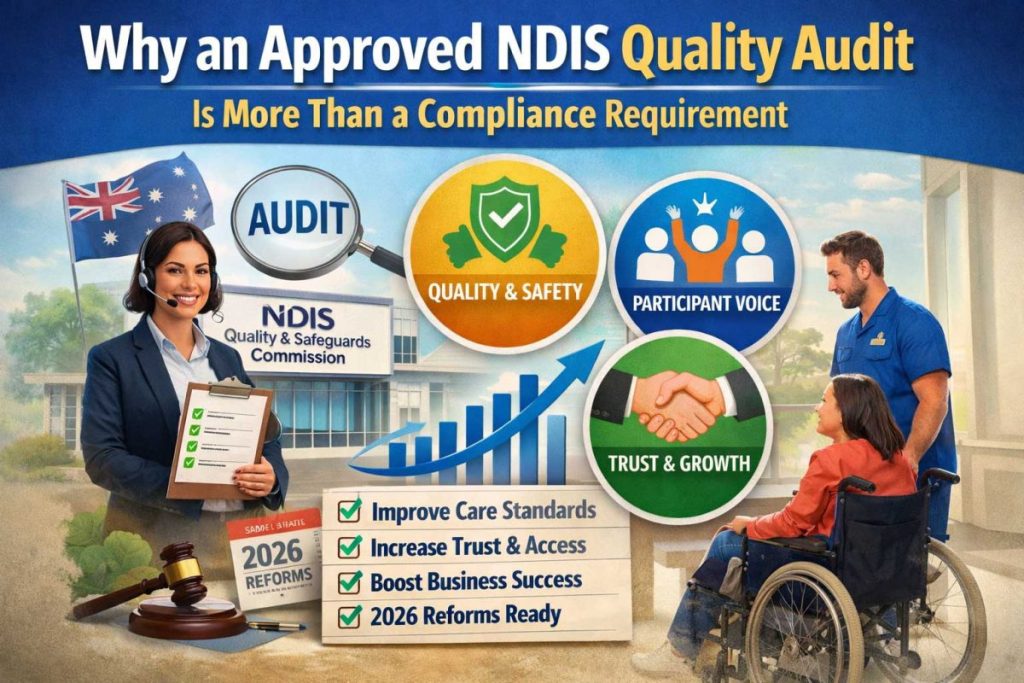


Understanding Compliance in the NDIS Sector
Understanding compliance in the disability sector is essential for any provider operating under the National Disability Insurance Scheme (NDIS). Compliance is not just about meeting legal requirements—it is about ensuring safe, ethical, and high-quality support for people with disability across Australia.
As the NDIS continues to grow, regulatory expectations are becoming more detailed and strictly enforced. Providers who understand compliance requirements are better positioned to deliver sustainable services, pass audits, and maintain trust with participants.
This article explains what NDIS compliance means, key obligations for providers, common challenges, and best practices for maintaining compliance in the disability sector.
What Is NDIS Compliance?
NDIS compliance refers to the rules, standards, and obligations that registered and unregistered providers must follow when delivering disability support services in Australia. These requirements are designed to protect participants and ensure services meet minimum quality and safety standards.
Compliance is overseen by the NDIS Quality and Safeguards Commission, which regulates providers and investigates breaches of standards.
At its core, compliance ensures that providers:
- Deliver safe and ethical services
- Respect participant rights and dignity
- Maintain proper documentation and reporting
- Follow national quality standards
- Protect vulnerable individuals from harm
Why Compliance Is Important in the NDIS Sector
Compliance is critical because it directly impacts participant safety and service quality. The NDIS is a person-centred system, meaning participants rely on providers for essential daily support.
Key reasons compliance matters:
- Protects participants from abuse or neglect
- Ensures consistent service quality
- Builds trust between providers and participants
- Reduces legal and financial risks for businesses
- Supports long-term sustainability of providers
Without strong compliance systems, the integrity of the entire disability support system can be compromised.
Key Compliance Requirements for NDIS Providers
Providers operating in the NDIS must meet several regulatory requirements depending on whether they are registered or unregistered.
1. NDIS Practice Standards
The NDIS Practice Standards outline the minimum quality requirements providers must meet.
These include:
- Rights and responsibilities of participants
- Governance and operational management
- Provision of supports
- Support planning and delivery
- Feedback and complaints management
These standards ensure that services are delivered consistently and safely across all providers.
2. Worker Screening and Safety Checks
All workers providing direct support to participants must pass the NDIS Worker Screening Check.
Requirements include:
- Criminal history checks
- Police clearance
- Risk assessment for working with vulnerable people
This ensures that only suitable individuals are allowed to work in sensitive support roles.
3. Incident Management and Reporting
Providers must have systems in place to record and report incidents.
Reportable incidents include:
- Abuse or neglect
- Serious injuries
- Death of a participant
- Illegal or inappropriate conduct
- Unauthorised restrictive practices
Timely reporting is essential to protect participants and prevent future harm.
4. Restrictive Practices Regulation
Restrictive practices refer to actions that limit a participant’s freedom or movement.
Examples include:
- Physical restraint
- Chemical restraint
- Environmental restrictions
These practices are heavily regulated and must only be used when absolutely necessary and approved through behaviour support plans.
5. Participant Rights and Safeguarding
Participants have the right to:
- Choose their providers
- Be treated with dignity and respect
- Receive safe and appropriate care
- Make complaints without fear of retaliation
Providers must ensure participants are fully informed of their rights at all times.
Common Compliance Challenges in the NDIS Sector
Despite clear guidelines, many providers face challenges maintaining compliance.
1. Complex Regulatory Requirements
NDIS compliance rules can be complex and difficult to interpret, especially for new providers.
Issues include:
- Frequent updates to regulations
- Difficulty understanding audit requirements
- Confusion around documentation standards
This complexity can lead to unintentional non-compliance.
2. Documentation and Record-Keeping Burden
Accurate documentation is essential but time-consuming.
Providers must maintain:
- Service delivery records
- Incident reports
- Staff training logs
- Participant progress notes
Failure to maintain proper records can result in audit failures or penalties.
3. Staff Training and Awareness Gaps
Compliance depends heavily on staff understanding their responsibilities.
Challenges include:
- High staff turnover
- Inconsistent training quality
- Lack of ongoing professional development
Without proper training, compliance risks increase significantly.
4. Resource Constraints for Small Providers
Smaller NDIS businesses often struggle with compliance due to limited resources.
Common issues:
- Lack of dedicated compliance staff
- Limited technology systems
- Time constraints for audits and reporting
This can make it harder to meet all regulatory obligations.
5. Audit Preparation Pressure
NDIS providers must undergo regular audits to maintain registration.
Challenges include:
- Preparing large volumes of documentation
- Ensuring all systems meet standards
- Managing corrective actions after audits
Audit preparation can be stressful and time-intensive.
Best Practices for Maintaining NDIS Compliance
Strong compliance systems are essential for long-term success in the disability sector. Providers can reduce risk by adopting structured processes.
1. Implement Strong Governance Systems
Good governance ensures accountability and structure within the organisation.
Best practices:
- Clear organisational policies
- Defined roles and responsibilities
- Regular leadership reviews
- Risk management frameworks
2. Invest in Staff Training and Development
Well-trained staff are essential for maintaining compliance.
Recommendations:
- Regular NDIS compliance training
- Induction programs for new employees
- Ongoing professional development
- Scenario-based learning for real-world situations
3. Use Digital Compliance Tools
Technology can simplify compliance management.
Useful tools include:
- Incident reporting systems
- Electronic document storage
- Workforce management software
- Audit tracking platforms
4. Conduct Regular Internal Audits
Internal audits help identify issues before external reviews.
Benefits:
- Early detection of compliance gaps
- Improved readiness for official audits
- Continuous improvement of systems
5. Maintain Clear Communication Channels
Good communication improves transparency and accountability.
Key actions:
- Regular team meetings
- Clear reporting structures
- Participant feedback systems
- Open complaint resolution processes
The Role of the NDIS Commission
The NDIS Quality and Safeguards Commission plays a central role in enforcing compliance standards.
Its responsibilities include:
- Registering and regulating providers
- Conducting audits and investigations
- Managing complaints and incidents
- Enforcing penalties for breaches
The Commission ensures that providers meet national standards and that participants receive safe and reliable services.
Future of Compliance in the NDIS Sector
Compliance requirements are expected to become more advanced as the NDIS evolves.
Future trends may include:
- Increased digital reporting systems
- Stricter enforcement of quality standards
- Greater focus on participant outcomes
- Enhanced transparency requirements
Providers who adapt early will be better positioned for long-term success.
Conclusion
Understanding compliance in the disability sector is essential for delivering safe, high-quality services under the National Disability Insurance Scheme. Compliance involves meeting legal obligations, maintaining accurate documentation, protecting participant rights, and ensuring consistent service quality.
While challenges such as complex regulations, staff training gaps, and audit pressures exist, providers can succeed by implementing strong governance systems, investing in training, and using technology to streamline processes.
Ultimately, compliance is not just a requirement—it is the foundation of trust, safety, and quality in Australia’s disability support system.