

Who Qualifies for NDIS Transition Housing Funding?
Finding the right living arrangement is one of the most important steps toward independence for people living with disability. If you or a loved one are exploring NDIS transition housing funding, you’re likely wondering: Who actually qualifies?
This comprehensive guide explains eligibility requirements, funding categories, assessment criteria, and how the National Disability Insurance Scheme (NDIS) determines who can access transition housing support.
What Is NDIS Transition Housing?
NDIS transition housing refers to short-term or time-limited accommodation that supports participants as they move toward more permanent independent living arrangements. It is designed to:
- Build independent living skills
- Provide temporary accommodation during life transitions
- Support hospital discharge or crisis situations
- Help participants trial Supported Independent Living (SIL)
Transition housing is typically funded under Short-Term Accommodation (STA), Medium-Term Accommodation (MTA), or in some cases, capacity-building supports.
Understanding NDIS Funding Categories for Transition Housing
Before looking at eligibility, it’s important to understand where transition housing fits within an NDIS plan.
1. Short-Term Accommodation (STA)
STA includes temporary stays (including respite) to:
- Provide informal carer relief
- Support skill development
- Offer a safe place during temporary changes in circumstances
Funding generally covers accommodation, support staff, meals, and personal care.
2. Medium-Term Accommodation (MTA)
MTA is designed for participants waiting for long-term housing solutions, such as:
- Specialist Disability Accommodation (SDA)
- Supported Independent Living (SIL)
- Social or community housing
MTA is usually approved for up to 90 days (sometimes longer depending on circumstances).
3. Capacity Building Supports
Some participants receive funding to build daily living skills while in transitional accommodation. This might include:
- Budgeting skills
- Cooking and meal planning
- Personal care independence
- Community participation skills
Who Is Eligible for NDIS Transition Housing Funding?
To qualify for NDIS transition housing funding, you must first be an eligible NDIS participant.
Step 1: General NDIS Eligibility
To access the NDIS, a person must:
- Be under 65 years old when applying
- Be an Australian citizen, permanent resident, or hold a Protected Special Category Visa
- Have a permanent and significant disability
- Require disability-related support to complete everyday activities
Once accepted into the scheme, eligibility for transition housing depends on individual needs and goals.
Key Criteria for Transition Housing Approval
NDIS transition housing funding is not automatically included in every plan. The National Disability Insurance Agency (NDIA) assesses each request based on whether it is reasonable and necessary.
Here are the main factors considered:
1. Is the Housing Related to Disability Support Needs?
Funding must directly relate to the participant’s disability. For example:
- The person cannot safely live independently without support
- They need structured skill-building before moving into SIL
- Their family home is no longer suitable
If housing needs are primarily related to general accommodation costs rather than disability, the NDIS may not fund it.
2. Is It a Time-Limited Transition?
Transition housing is temporary by nature. The NDIA will assess:
- Is the participant moving toward long-term housing?
- Is there a clear transition plan in place?
- Are there measurable goals attached to the stay?
Without a defined pathway to more permanent housing, funding is less likely to be approved.
3. Are There Safety or Crisis Factors?
Transition housing funding may be approved when:
- A participant is being discharged from hospital
- Informal supports have broken down
- There is risk of homelessness
- Carers are unable to continue providing support
In these situations, Short-Term or Medium-Term Accommodation can provide stability while longer-term arrangements are organised.
4. Are Skill Development Goals Identified in the NDIS Plan?
NDIS funding is goal-driven. To qualify for transition housing, participants typically need goals such as:
- “I want to live more independently.”
- “I want to improve my daily living skills.”
- “I want to prepare to move into supported accommodation.”
The clearer the goals, the stronger the case for funding.
Who Is Most Likely to Qualify?
While every case is assessed individually, participants commonly approved for NDIS transition housing include:
- Young adults moving out of the family home for the first time
- Participants trialling Supported Independent Living
- Individuals waiting for Specialist Disability Accommodation
- People leaving hospital or rehabilitation
- Participants whose carers can no longer provide support
Approval depends on documented need, supporting reports, and alignment with NDIS criteria.
Who May Not Qualify?
NDIS transition housing funding may not be approved if:
- The request is primarily for affordable housing
- There is no disability-related support need
- No transition plan or goals are identified
- Mainstream housing systems (e.g., public housing) are more appropriate
It’s important to note that the NDIS does not generally pay for everyday living expenses such as rent in long-term housing.
Evidence Required to Support an Application
Strong documentation significantly improves approval chances. Participants should provide:
- Occupational therapy (OT) reports
- Functional capacity assessments
- Hospital discharge summaries (if applicable)
- Behaviour support plans (if relevant)
- A clear transition or housing plan
Reports should explain why the current living arrangement is unsuitable and how transition housing will improve independence or safety.
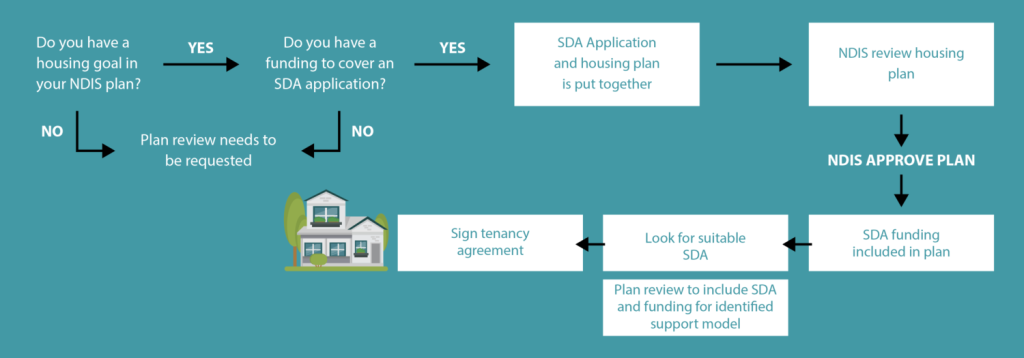
How to Apply for NDIS Transition Housing Funding
Here is a step-by-step overview:
Step 1: Review Your Current NDIS Plan
Check whether STA or MTA funding is already included.
Step 2: Speak With Your Support Coordinator
A support coordinator can help gather evidence and prepare documentation.
Step 3: Request a Plan Review
If funding is not included, you may need:
- A scheduled plan reassessment
- A change of circumstances review
Step 4: Submit Supporting Reports
Attach professional assessments clearly linking housing needs to disability-related supports.
How Long Does Approval Take?
Timeframes vary depending on:
- Complexity of the case
- Whether it is crisis-related
- Availability of supporting evidence
Urgent situations (such as hospital discharge) are typically prioritised.
Tips to Improve Your Chances of Approval
If you are seeking NDIS transition housing funding, consider the following strategies:
- Clearly link housing to disability impact
- Demonstrate risk if support is not provided
- Outline measurable goals
- Provide professional documentation
- Show a clear pathway to long-term accommodation
The stronger the connection between the housing request and functional impairment, the more likely it is to meet “reasonable and necessary” criteria.
Frequently Asked Questions About NDIS Transition Housing
Is transition housing the same as Supported Independent Living (SIL)?
No. Transition housing is temporary, while SIL is an ongoing support arrangement in shared or individual living environments.
Can NDIS pay for rent?
The NDIS does not generally cover standard rent costs. It funds disability-related supports associated with accommodation.
How long can someone stay in transition housing?
STA is usually short stays (up to 14 days at a time), while MTA can extend up to 90 days or more depending on circumstances.
Final Thoughts: Determining Eligibility for NDIS Transition Housing Funding
So, who qualifies for NDIS transition housing funding?
In summary, eligible participants are those who:
- Are approved NDIS participants
- Have disability-related housing support needs
- Require temporary accommodation during a life transition
- Have clear goals for building independence
- Can demonstrate that funding is reasonable and necessary
Because every participant’s situation is unique, outcomes depend heavily on documented need and evidence.
If you’re considering NDIS transition housing, speak with your support coordinator or plan manager to review your options and ensure your goals align with funding criteria. With the right preparation and evidence, transition housing can be a powerful step toward greater independence and long-term stability.